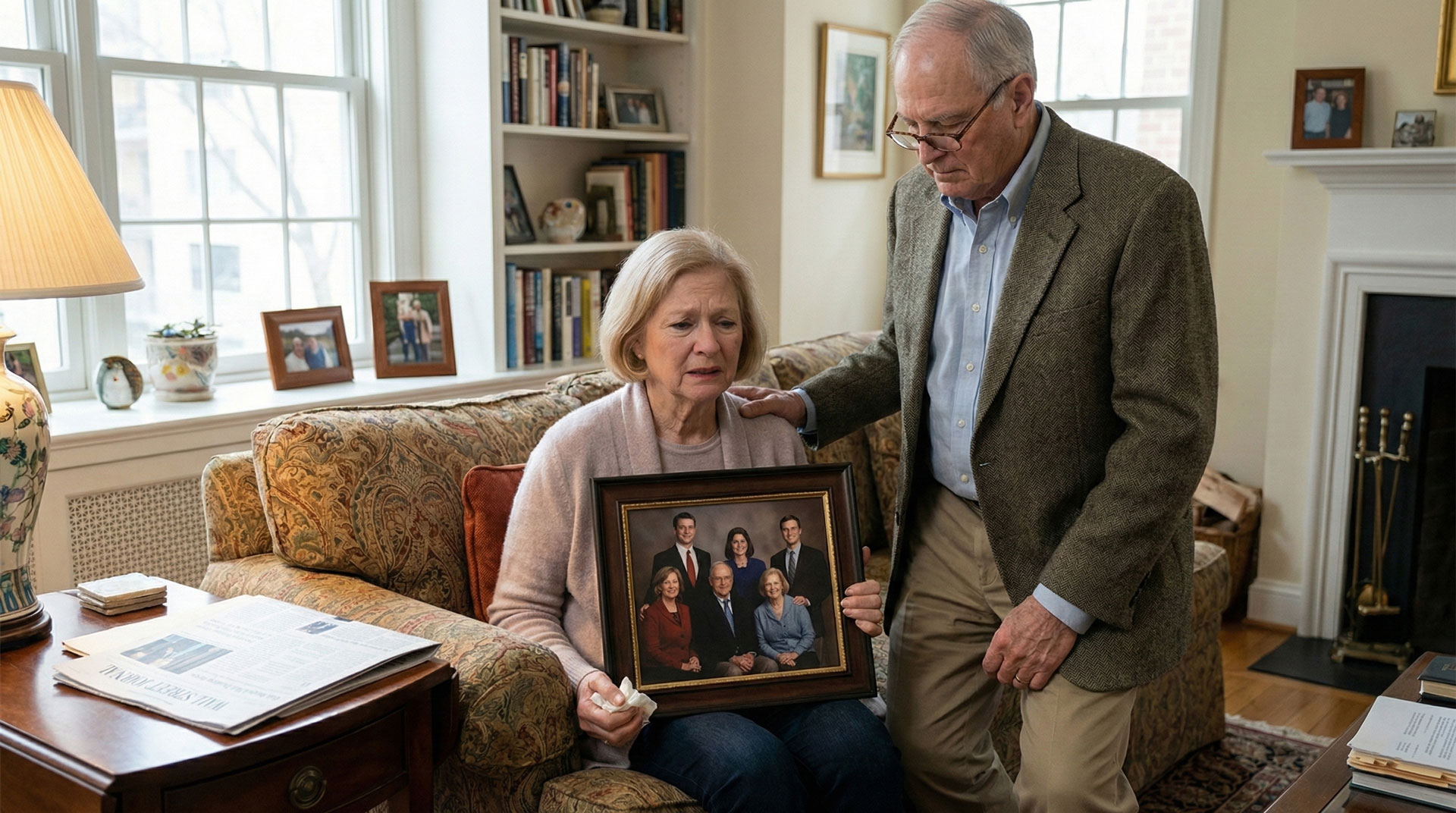
Bill and Marsha came into my office to talk about their estate plan. They had three children. They were close to a son and a daughter but their other son (let’s call him Joe) called one day and told them that on the advice of friends and his therapist, he was cutting off his ties with his parents. He had been told not to talk to them beyond making that statement. Bill and Marsha knew that Joe had been struggling emotionally recently, but this phone call was a complete surprise to them. When they asked Joe why he was cutting off ties, Joe simply repeated his statement and hung up the phone.
After that, Bill and Marsha (particularly Marsha) tried to contact Joe to see if they could talk about whatever the problem was, but Joe would not take their calls or answer their texts. He continued to talk to his siblings, but he even refused to talk to them about what was going on with his relationship between him and their parents.
This was not the first time I have encountered this situation where a child cut off communication with their parents, but it was the first time that I heard that the child’s therapist had advised him or her to cut off all ties. It turns out that this is not an uncommon phenomenon. There was a recent article in the Wall Street Journal talking about these kinds of breakdowns. There is a study that estimated that something like this happens in up to perhaps 10% of families. There is no one cause for these breakdowns. They can occur because of choices made or political views held. Families can be complicated, but it seems that this is a result of the general breakdown of our society. People are unable to look past their differences and see what should unite us all.
Anyway, Bill and Marsha had decided to leave Joe out of their estate plan. Parents, of course, are free to do that, but they have to do it the right way. They can’t just ignore the child. If they do, then later, the estranged child can argue that the parents had not been competent when they wrote their estate plan. One of the tests of competency is whether the client remembered the “objects of their beneficence,” that is, their children. They need to specifically disinherit the child. That is kind of a harsh term, so perhaps the wording needs to be delicate, sensitive to the circumstances, but it needs to be addressed.
This is a sad situation, but it happens. Give me a call if you want to talk.